


A typical motorcycle accident pain and suffering settlement in Connecticut ranges from $20,000 to $300,000. The amount depends on several key factors that significantly impact your final compensation:
- Severity and Type of Injuries Sustained
- Medical Expenses and Treatment Costs
- Impact on Daily Life and Work Capacity
- Duration and Intensity of Pain
- Available Insurance Coverage
Many motorcycle crash victims endure relentless physical pain, emotional trauma, and the loss of activities that once brought joy. These effects often linger long after visible wounds heal, impacting sleep, relationships, and mental well-being. Settling before fully understanding the extent of this suffering can leave you without the resources to address its long-term toll.
Our firm has secured significant settlements across a wide range of personal injury matters, including:
- $900,000: A 46-year-old woman was awarded compensation via settlement after falling in a restaurant kitchen and suffering serious back and spinal injuries that resulted in permanent wheelchair dependency.
- $590,000: A 38-year-old man reached a settlement with his employer after suffering serious injuries in a work-related accident when struck by a utility pole while working on a garbage truck.
- $295,000: A 39-year-old man was awarded compensation in a special arbitration after being thrown around inside a bus when a car struck it, requiring three different abdominal surgeries and resulting in permanent back and spinal disabilities.
Expert Legal Advice for Your Motorcycle Accident Injury Claim
Our experienced legal team understands the unique challenges motorcycle accident victims face when seeking fair compensation for their injuries and losses.
We recommend using our realistic settlement calculator to get an initial estimate of your case’s potential value. This tool considers various factors specific to Connecticut motorcycle accidents to provide a more accurate assessment.
Disclaimer: The result from the calculator doesn’t constitute legal advice and should be used for informational purposes only.
Selected Value: 0%
Our Bridgeport motorcycle accident attorney will review your case and help you understand your legal options.

Factors Influencing Your Pain and Suffering Amount
Several critical elements determine the value of your motorcycle accident pain and suffering settlement. Understanding these factors helps you better assess your claim’s potential worth.
Severity and Type of Injuries Sustained
The nature and extent of your injuries strongly influence your pain and suffering award. Catastrophic harm, such as traumatic brain injury, spinal cord damage, or limb loss, often leads to higher compensation because of the permanent and life-altering impact.
Serious injuries that require extensive treatment, multiple surgeries, or long rehabilitation show the ongoing physical and emotional toll. For example, a traumatic brain injury can bring lasting headaches, memory loss, and mood changes that affect every part of life, far beyond the initial hospital stay.

Medical Expenses and Treatment Costs
While medical bills are part of your economic damages, they also reflect the severity of your pain and suffering. Long hospital stays, repeated surgeries, and ongoing therapy demonstrate how much your injury has disrupted your daily life and caused prolonged discomfort.
Future medical needs are another indicator of suffering. Years of rehabilitation or specialist care highlight how the pain continues to affect you, making detailed medical records essential to show the full scope of your hardship.
Impact on Daily Life and Work Capacity
Pain and suffering are often measured by how much your injury changes your everyday life. Losing the ability to enjoy hobbies, care for yourself, or spend time with family can be as damaging as the physical pain itself.
When your injuries prevent you from working or force you to take a lower-paying job, the emotional stress can be significant. These lifestyle changes are key in showing the full human cost of your accident.
Duration and Intensity of Pain
The length of time you experience pain and how severe it is are major factors in your non-economic damages. Chronic pain, lasting scars, or disfigurement can affect you for years, making it harder to return to normal routines.
Detailed records help show how the pain impacts your days. Pain journals, medical notes, and testimony from those close to you can help illustrate the ongoing struggle you face.
Available Insurance Coverage
Even when pain and suffering are clear, the average motorcycle accident settlement often depends on available insurance. Connecticut’s minimum liability coverage may not be enough to address the full impact of your injuries.
Uninsured and underinsured motorist coverage can help bridge the gap when the at-fault driver’s insurance is insufficient. This coverage lets you pursue additional compensation so your non-economic damages are not left unpaid.
Connecticut Motorcycle Accident Laws That Can Impact Your Claim
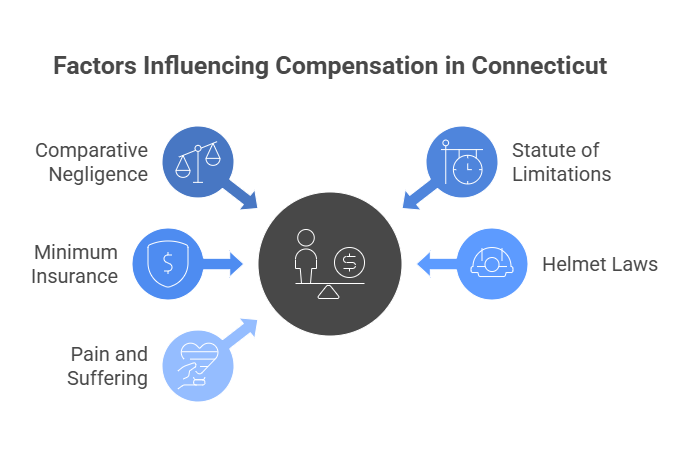
Connecticut follows specific laws that directly affect your ability to recover compensation and the amount you may receive. Understanding these legal framework elements helps you handle your claim more effectively.
- Comparative Negligence: Connecticut uses a modified comparative negligence system, meaning your settlement may be reduced by your percentage of fault. If you’re found more than 50% responsible, you cannot recover damages.
- Statute of Limitations: You have two years from the accident date to file a lawsuit against the responsible party. Missing this deadline typically results in losing your right to seek compensation.
- Minimum Insurance Requirements: Connecticut mandates $25,000 per person and $50,000 per accident in bodily injury liability coverage, plus $25,000 in property damage coverage.
- Helmet Laws: In Connecticut, all motorcycle riders and passengers under 18 must wear a helmet, as well as anyone holding a learner’s permit. Failing to follow this law can result in fines and may give insurance companies grounds to argue that your injuries were more severe because you were unprotected.
- Pain and Suffering Recovery: Unlike no-fault states, Connecticut allows victims to pursue pain and suffering damages independently of economic losses, providing greater compensation opportunities.
📌 Understanding these laws is only part of protecting your rights after a motorcycle accident. Our lawyers know how to apply these rules to strengthen your claim, counter insurance company tactics, and pursue the full pain and suffering compensation you deserve. We handle every step so you can focus on your recovery.
The Process for Starting Your Pain and Suffering Claim
The legal process for pursuing compensation for a motorcycle accident involves several key steps that must be completed within specific timeframes. Understanding this process helps ensure you don’t miss critical deadlines or opportunities to strengthen your case.
- Seek Immediate Medical Attention: Document your injuries thoroughly and follow all treatment recommendations to establish the connection between the accident and your damages.
- Gather Evidence: Collect police reports, witness statements, photos of the accident scene, and all relevant documentation to support your negligence claim.
- Notify Insurance Companies: Report the accident to both your insurer and the at-fault party’s carrier, but avoid providing recorded statements without legal counsel.
- Calculate Total Damages: Document all economic and non-economic losses, including medical expenses, lost wages, and pain and suffering impacts.
- File Your Claim: Submit a comprehensive demand package detailing your injuries, damages, and the basis for the responsible party’s liability.
- Negotiate Settlement: Work with insurance adjusters to reach a fair resolution that adequately compensates you for all your losses and future needs.
✔️ Most motorcycle accident claims settle out of court, but having an experienced attorney ensures you’re prepared for trial if necessary to achieve fair compensation. We help with every stage above, from gathering evidence to negotiating your settlement, so you have strong support throughout the entire process.
Additional reading: motorcycle accident settlement calculator
How Pain and Suffering Damages Are Calculated in Connecticut
Connecticut courts use established methods to determine appropriate pain and suffering compensation, though no exact formula exists due to the subjective nature of these damages.
- The Multiplier Method: Courts multiply your economic damages (medical bills, lost wages) by a factor typically ranging from 1.5 to 5, depending on injury severity and impact on your life.
- The Per Diem Method: This approach assigns a daily dollar amount to your pain and suffering, then multiplies it by the number of days you’ve experienced or will experience these effects.
| Injury Severity | Typical Multiplier Range | Settlement Range |
|---|---|---|
| Minor injuries | 1.5 – 2.5 | $20,000 – $75,000 |
| Moderate injuries | 2.5 – 3.5 | $75,000 – $200,000 |
| Severe injuries | 3.5 – 5.0 | $200,000 – $300,000+ |
The multiplier or daily rate depends on factors such as your age, injury permanence, treatment complexity, and how the injuries affect your lifestyle and relationships.
Common Mistakes to Avoid in Pain and Suffering Claims
Many motorcycle accident victims inadvertently damage their claims by making avoidable errors during the legal process. Understanding these pitfalls helps protect your right to full compensation.
- Underestimating Your Claim’s Value: Accepting low settlement offers without proper evaluation often results in inadequate compensation for long-term needs.
- Delaying Medical Treatment: Gaps in treatment can weaken your claim by suggesting injuries aren’t as serious as claimed or weren’t caused by the accident.
- Not Documenting Pain and Suffering: Lack of evidence makes it harder to prove non-economic damages and justify higher compensation amounts.
- Posting on Social Media: Sharing details about your accident, injuries, or activities can be used against your claim to minimize your damages.
- Providing Recorded Statements: Insurance adjusters may use your words against you to reduce their liability or deny your claim entirely.
- Settling Before Understanding Full Injury Extent: Some injuries worsen over time or require unexpected treatment, making early settlement potentially inadequate.
💡 Hypothetical scenario: A motorcyclist was traveling on Route 95 when a distracted driver changed lanes without checking their blind spot, striking the bike and causing multiple fractures and severe road rash. Initial medical bills totaled $75,000, but ongoing physical therapy and counseling increased total costs to $125,000 over two years.
By fully documenting the physical pain, emotional distress, and long-term limitations, their attorney applied a 3.5 multiplier for severe injuries, resulting in a pain and suffering award of about $262,500—well within the $200,000 to $300,000+ range for severe injuries. This brought the total claim value to roughly $387,500, far higher than the insurance company’s initial low offer.
Seeking treatment at facilities like Yale New Haven Hospital ensures you receive comprehensive medical care while creating the detailed documentation necessary for a strong legal claim. The University of Connecticut also provides valuable research and educational resources about motorcycle safety and accident prevention.
How Our Connecticut Motorcycle Accident Attorney Can Help
Our dedicated legal team brings decades of experience to motorcycle accident cases, ensuring you receive the maximum compensation possible for your injuries and losses. We understand the unique challenges motorcycle accident victims face and fight tirelessly to protect your rights.
We handle every aspect of your case, from investigating the crash to negotiating with insurance companies and, if necessary, taking your case to trial. Our proven track record includes securing substantial settlements for clients with various injury types and accident circumstances.
For comprehensive information about settlement amounts across different injury types, review our personal injury settlement amounts examples to better understand the compensation you may be entitled to receive.
Go with who you know, call Park Avenue Paul at +1 203-884-7075 or contact us online for a free consultation to discuss your motorcycle accident claim.

FAQs
How long do I have to file a motorcycle accident lawsuit in Connecticut?
Connecticut’s statute of limitations gives you two years from the accident date to file a personal injury lawsuit. Missing this deadline typically bars you from seeking compensation through the courts, making timely action essential for protecting your rights.
Can I still recover damages if I was partially at fault for the accident?
Yes, Connecticut follows a modified comparative negligence rule allowing recovery as long as you’re 50% or less at fault. However, your settlement will be reduced by your percentage of responsibility for the crash.
What if the other driver doesn't have enough insurance to cover my damages?
Your uninsured/underinsured motorist coverage can help bridge the gap when the at-fault party lacks sufficient insurance. This coverage allows you to seek additional compensation from your own insurance company for the shortfall.
Should I accept the insurance company's first settlement offer?
Insurance companies typically offer low initial settlements, hoping to resolve claims quickly and cheaply. These offers rarely reflect the true value of your damages, especially when considering future medical needs and long-term impacts of your injuries.

Author
Alexa focuses on personal injury and car accident litigation throughout Fairfield County.